

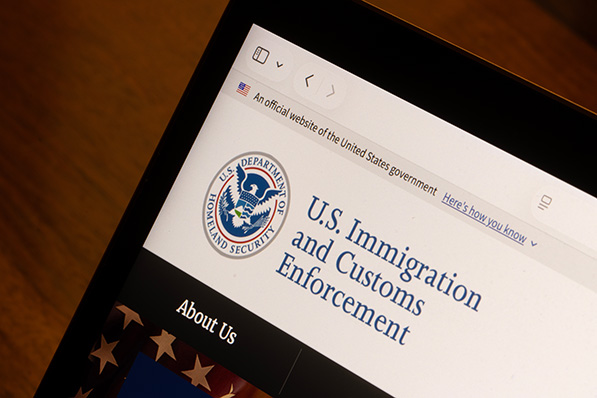
The U.S. Immigration and Customs Enforcement (ICE) recently revised its Form I-9 Inspection Under Immigration and Nationality Act § 274A fact sheet to take more aggressive positions on certain Form I-9 violations, ultimately increasing the risk of employer penalties.
This long-standing fact sheet describes ICE’s I-9 inspection process, beginning with serving a Notice of Inspection (NOI) on the employer and describing potential outcomes based on what ICE discovers during the inspection. If ICE finds a problem with a Form I-9, it classifies it as either a “technical” or “substantive” violation, depending on the specific issue. Importantly, if ICE identifies a technical violation, employers have 10 business days to correct the problem without penalties. Substantive violations have no such cure period and are subject to penalties.
Recent revisions to ICE’s I-9 inspection policy have reclassified certain violations from “technical” to “substantive,” effectively eliminating the 10-day cure period for many common errors in Form I-9 paperwork.
Adding a good-faith exception to federal law, the Illegal Immigration Reform and Immigrant Responsibility Act of 1996 created the distinction between technical and substantive errors in employment verification. It allows employers who make only a “technical or procedural failure” to avoid penalties if they correct the failure within 10 business days after receiving notice from the government. The law, however, doesn’t define the term.
To apply the exception, federal agencies relied on a 1997 Immigration and Naturalization Service memorandum, which provided interim guidance on the good-faith exception. Although the memo provisions were not adopted into regulations, ICE has largely followed its provisions over the decades until the recent changes.
ICE’s revised fact sheet contains a lengthy list of substantive violations. These include, for example:
- Missing date of birth.
- Missing date of hire.
- Failure to complete registration/USCIS number field.
- Missing date in section 1.
- Failure to print complete name and title of employer or authorized representative in section 2.
- Missing date of hire in attestation portion of section 2.
- Failure to provide date of rehire in Supplement B.
The fact sheet also identifies new technical violations. Though technical violations may be cured within 10 business days, all technical violations that employers fail to cure become substantive violations subject to penalties.
The new substantive violations mean there’s a higher risk of financial penalties for noncompliance, which can range from $288 to $2,861 per violation. And California employers can’t forget about state-specific requirements that trigger when they receive a Notice of Inspection from the federal government, including posting a notice to current employees within 72 hours of receiving the Notice of Inspection.
Employers should carefully review the new ICE guidance and consider auditing their Form I-9 practices to ensure they are complying with the law and avoiding hefty penalties for minor errors.
James W. Ward, J.D., Employment Law Subject Matter Expert/Legal Writer and Editor, CalChamber
CalChamber members can read more about Completing the Form I-9 in the HR Library. Not a member yet? See how CalChamber can help you.
