

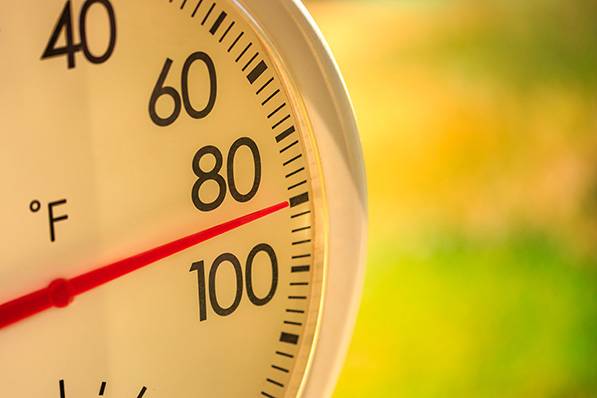
A heat advisory in March? This is Northern California’s first heat advisory ever issued this early. This week, in Northern California, high temperatures are expected to range between 84 and 94 degrees, while some areas in Southern California might see temperatures as high as 104. And while the calendar says it’s still technically winter, many employers will need to implement high-heat measures to protect workers from heat illness.
California’s heat illness standard applies to both indoor and outdoor places of employment. The California Division of Occupational Safety and Health (Cal/OSHA) reminds employers to be vigilant as employees may not yet be acclimatized to high heat and may need additional breaks and interventions as they adapt to the heat conditions.
Employers with outdoor workers must:
- Establish, implement and maintain an effective written Outdoor Heat Illness Prevention Plan that includes procedures for providing drinking water, shade, preventative rest periods, close observation during acclimatization, high-heat procedures, training and prompt emergency response.
- Train all employees and supervisors in heat illness prevention.
- Provide drinking water that is fresh, pure, suitably cool and free of charge so that each worker can drink at least one quart per hour and encourage workers to do so.
- Encourage workers to take a cool-down rest in the shade for at least five minutes when they feel the need to do so to protect themselves from overheating. Workers should not wait until they feel sick to cool down. The cool-down area must be kept at a temperature below 82 degrees.
- Provide proper shade when temperatures exceed 80 degrees. Workers have the right to request and be provided shade to cool off at any time.
Employers with indoor workplaces where the temperature reaches 82 degrees or higher must:
- Follow the same training, water provision, acclimatization and emergency response procedures as outdoor work areas.
- Provide access to at least one cool-down area, which must be kept at a temperature below 82°F.
- Establish, implement and maintain an effective written Indoor Heat Illness Prevention Plan that includes procedures for providing drinking water, cool-down areas, preventative rest periods, close observation during acclimatization, assessment and measurement of heat, training, prompt emergency response, and feasible control measures.
- Implement control measures to keep workers safe. Feasible engineering controls must be implemented first, followed by administrative controls, then protective heat-protective equipment.
Heat illness is a serious and potentially deadly hazard. It’s now a good time for employers in indoor and outdoor settings to review their written heat illness prevention plan and make sure supervisors are effectively trained on how to recognize the common signs and symptoms of heat illness, and what to do in case of an emergency.
Mike McCluskey, Senior Technical Editor, CalChamber
CalChamber members can read more about Implementing High-Heat Procedures and Outdoor Workplaces v. Indoor Workplaces in the HR Library. Not a member? Learn how to power your business with a CalChamber membership.
