

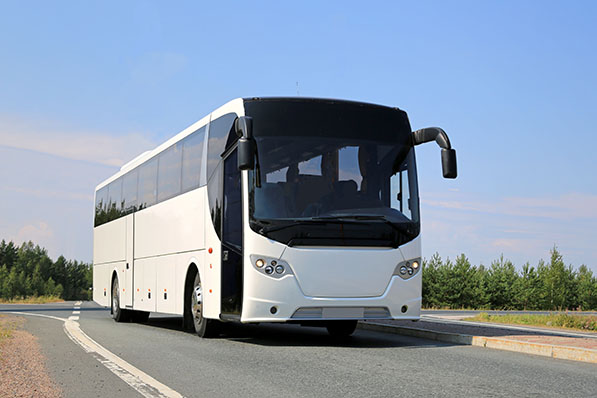
For the last several years, California and other interested parties have fought in court over whether California’s meal and rest break laws can be enforced for drivers operating vehicles covered by Federal Motor Carrier Safety Administration (FMCSA) regulations. And recently, the Ninth Circuit Court of Appeals denied the state of California’s petition for review of an FMCSA order finding that federal rules preempted California’s meal and rest break laws as they pertain to drivers of passenger-carrying commercial motor vehicles.
In 2018, this dispute started when the FMCSA ruled that federal motor carrier regulations preempt or override more stringent state meal and rest break laws. The FMCSA specifically cited California’s meal and rest breaks rules as unenforceable for drivers subject to the FMCSA’s “hours-of-service” (HOS) rules because they:
- Provide no additional safety benefits to drivers beyond the HOS rules;
- Are incompatible with the FMCSA regulations; and
- Would cause an unreasonable burden on interstate commerce.
The HOS rules generally limit the number of hours a covered driver may drive in a day and a week. For example, a property-carrying covered driver may only be on duty 14 consecutive hours, with only 11 of those hours available for driving. At the end of a 14-hour on-duty period, the driver must be off-duty for 10 consecutive hours. Property-carrying drivers also must take a 30-minute break at some point during the first eight hours of driving.
The HOS rules also generally prohibit covered drivers from operating a commercial vehicle at any time when they are too fatigued or unable to otherwise safely drive.
A 2021 Ninth Circuit decision upheld FMCSA’s 2018 order regarding property-carrying drivers.
In 2020, the FMCSA issued an order with a similar rationale for passenger-carrying drivers subject to federal HOS rules. And now the Ninth Circuit recently denied the state of California’s petition to overturn the FMCSA’s order.
While the HOS rules are similar for covered passenger-carrying drivers, one major distinction is that these drivers are not required to take a 30-minute break like property-carrying drivers. In its argument against the FMCSA’s order regarding passenger-carrying drivers, the state of California claimed that:
- The FMCSA order is too broad, going beyond just “motor carrier safety”;
- The FMCSA’s order that meal and rest breaks would create an unreasonable burden on interstate commerce was arbitrary; and
- Because the FMCSA hasn’t required breaks for passenger-carrying drivers, it has not actually issued rules governing breaks in this area, meaning the federal rules can’t override California’s meal and rest break laws for these types of drivers.
The Ninth Circuit rejected these arguments, largely relying on its 2021 decision regarding property-carrying drivers and finding support in the administrative record that allowing California to enforce meal and rest breaks for covered passenger-carrying drivers would create an unreasonable burden on interstate commerce as stated by the FMCSA.
Based on these various orders and rulings, it has become well-settled that drivers subject to the FMCSA’s HOS rules are not subject to California’s meal and rest break rules. However, not all drivers are subject to HOS rules, so employers should review FMCSA regulations and consult with legal counsel to determine if their drivers are subject to HOS rules, and therefore, exempt from California’s meal and rest break laws.
Matthew J. Roberts, Associate General Counsel, Labor and Employment
CalChamber members can read more about Meal and Rest Break Exceptions, including truck drivers subject to federal law, in the HR Library. Not a member? See how CalChamber can help you.
